

This is the third in a series of blog posts highlighting the importance of building our own values-aligned systems, especially when the systems we live and work within do not prioritize or support our humanity.
“How you do the thing matters just as much as the thing you do.”
Erica Williams Simon
In our previous blog post, The Systems We Build Matter and Building Systems that Support, Not Suppress, Our Humanity, we explored how systems function beneath the surface of our workplaces. They shape not just what we do, but how we do it and how we relate to ourselves and each other.
Now we’re turning to a deeper truth:
Systems don’t just structure behavior—they shape our beliefs.
What we often experience as bias—toward people, ideas, or identities—is not simply an individual preference. It’s a patterned outcome of the systems we’re in.
Systems Teach Us What to Value
Every system carries a set of values. These values become the lens through which we evaluate excellence, merit, and belonging. A system driven by constant growth, for example, may reward speed, visibility, and output, but not necessarily quality, sustainability, or collaboration.
This is one of the hidden harms of capitalism’s growth imperative (the value being “growth”); when we believe more is better, we stop asking whether what we’re building is working, ethical, or meaningful. In a system like that, mediocrity can thrive, so long as it scales.
And when mediocrity is rewarded we begin to believe it looks like excellence.
So, if we want to ensure our culture reflects our values, we need to examine our systems.
What Do We Mean by “System”?
At Leverage to Lead, we use this shared language—drawn from our ANCHOR program—to help teams understand the building blocks of culture:
- System: A value set. A coordinated structure for how things work.
- Structure: The arrangement of components (e.g., meetings, org charts, reporting lines).
- Framework: The functions and flow of work (e.g., decision-making protocols, communication plans).
- Skills: The capacities we bring based on our identities and experiences.
- Practices: What people are doing inside the system—their habits, communication, and behaviors.
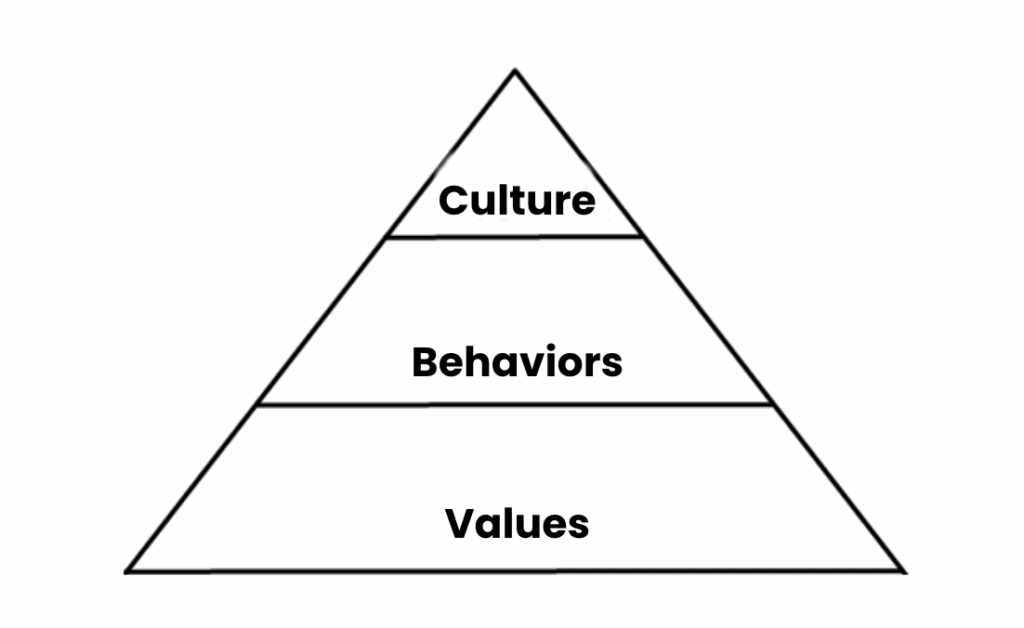
A simple way to understand the underlying values in any system is to observe the behaviors enacted within the system. Our behaviors communicate our values, whether they are conscious or not. For example, if I tend to stay quiet during team meetings, but express my concerns to a trusted colleague after the meeting, I am showing that I value keeping the peace above direct problem solving. Values are neutral – “keeping the peace” isn’t good or bad. But it’s helpful to understand if holding and enacting that value in that way is supportive to our shared goals.
Tension Signals a Systemic Need
In our post on tension, we shared that interpersonal conflict is often a sign that a system needs to be clarified or rebuilt. When a workplace issue is repeating, unresolved, or emotionally charged, it’s worth asking: Is this really about people? Or is it about the system they’re navigating?
Take silos, for example. They’re often labeled as interpersonal: teams don’t communicate, managers don’t share priorities. But silos are a systemic condition. They reflect a lack of structures that support collaboration and shared ownership across teams or departments. When silos are operating, they tend to build beliefs around a lack of transparency, the personal intentions of colleagues, and who has power and who doesn’t based on how much or little information someone has.
So what might it look like to build something different?
Building Culture from Where You Are
We know that not every team has the authority to overhaul an organization’s legacy systems. But it is possible to build and create systems within your sphere of influence; what we call small-s systems. A hiring manager can change their interview process. A team lead can clarify decision-making roles. An employee can request a regular feedback loop.
And if your current organization doesn’t support this kind of system building, you now have the language to name what you’re looking for in your next role.
Because systems are always operating, whether or not we’ve named them. The question is: Are they reinforcing the values we say we hold? Or are they quietly creating confusion, frustration and mediocrity?
From Silos to Systems of Partnership
So what do you do if your organization struggles with siloed communication? First, identify the values that are functioning. The values behind that system might be autonomy, speed, tradition, or hierarchy. What values would disrupt that dynamic in service of your mission?
Maybe it’s relationship-building or collaboration.
The small-s systems you need might include quarterly cross-functional meetings, shared planning documents, or peer shadowing across departments.
One important caveat: no system will solve for the tension, conflict and confusion that can sometimes arise when humans with different perspectives and priorities are working together.
They become impactful when paired with the skills and practices that support them (we call them Human-Centered Practices), like deep listening, shared accountability, and curiosity. This is the process of bringing our humanity into the systems we live and work within.
New Systems Make Room for New Beliefs
When we change the systems we live and work within (even in small ways), we begin to shift the beliefs those systems have long held in place; beliefs about:
- who belongs
- who gets to lead
- what good work looks like
- how we show up for one another
- who holds responsibility
- how and when we collaborate
Human-centered systems don’t just change behavior, they expand our capacity for shared responsibility, collaboration and decision-making. And over time, they create the conditions for new ideas and perspectives to take root. Most importantly, they build our capacity to hold compassion for ourselves and others as we practice new ways of working with each other.
Eventually, culture changes from something that happens to us to something we build on purpose.